
Capybara: Where Capybaras Are From and Where to See Them in Peru
Capybaras are not from a single country: they come from South America, where they live wild in 12 countries. The capybara (Hydrochoerus hydrochaeris), the largest living rodent, is native to the lowlands east of the Andes, from Colombia and Venezuela south to Uruguay and northeastern Argentina. The 12 countries are Argentina, Bolivia, Brazil, Colombia, Ecuador, French Guiana, Guyana, Paraguay, Peru, Suriname, Uruguay and Venezuela. In Peru, where it is called ronsoco, it lives in the Amazon lowlands, including Manu National Park and the Tambopata National Reserve, and it is one of the animals we see most often on our Manu trips.
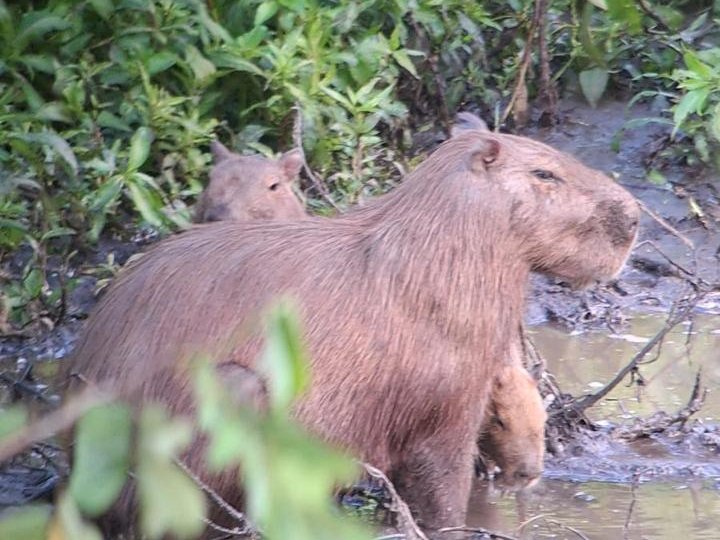
Which countries do capybaras live in?
The capybara needs water and open grass, so it lives in lowland savannas, flooded grasslands, marshes and forest along rivers and lakes. The Andes mark the edge of its range: there are no wild capybaras in Chile, and in Peru it lives only on the Amazon side, east of the mountains.
A second, smaller species, the lesser capybara (Hydrochoerus isthmius), lives in Panama, western Colombia and western Venezuela.
Capybara facts at a glance
| Scientific name | Hydrochoerus hydrochaeris (family Caviidae) |
|---|---|
| Name in Peru | Ronsoco |
| Native range | South America east of the Andes (12 countries) |
| Habitat | Grassland and forest next to rivers, lakes and marshes |
| Head and body length | 107–134 cm (3.5–4.4 ft) |
| Weight | 35–65 kg (77–143 lb); record 91 kg (200 lb) in southern Brazil |
| Diet | Mainly grasses, about 3 kg (6.6 lb) of fresh food a day |
| Group size | Up to 40 in the rainy season and up to 100 at water in the dry season |
| Lifespan in the wild | Usually 7–10 years |
| Conservation status | Least Concern (IUCN) |
Where to see capybaras in Peru
SERNANP, Peru’s protected areas service, lists the capybara in at least seven protected areas: Manu National Park, Pacaya Samiria National Reserve, Bahuaja Sonene National Park, Tambopata National Reserve, El Sira Communal Reserve, Yanachaga Chemillén National Park and the San Matías San Carlos Protection Forest.
On our Manu National Park tours we usually find groups of 5 to 10 on the banks of the Madre de Dios River, in wetlands and around oxbow lakes such as Machuhuasi, feeding or moving between the water and the forest. Capybaras also live along the rivers of Tambopata, which you can visit on our 3-day Tambopata tour or any of our Tambopata tours from Puerto Maldonado.
The best times are early morning and late afternoon. Capybaras rest at the water’s edge in the morning, shelter in the water or mud during the heat of the day, and graze most in the late afternoon and evening.
How capybaras live
- Built for water. Slightly webbed toes and eyes and ears set high on the head let them swim with almost the whole body underwater, and they can stay submerged for up to 5 minutes.
- Family groups. A breeding group is usually one male with 4 to 14 females and their young, and groups defend territories along the rivers that stay the same for years.
- Alarm bark. When a capybara spots danger it gives a bark or a cough, and the rest of the group stands alert or plunges into the nearest water.
- Partners with birds. At least nine bird species feed alongside capybaras, using them as perches and picking ticks from their skin.
- Many predators. Jaguars, pumas, ocelots, caimans and birds of prey hunt capybaras, and water is their escape route. Read more about the jaguar in Manu.
Are capybaras endangered?
No. The IUCN Red List classifies the capybara as Least Concern. In the Peruvian Amazon it is not considered threatened, but it is hunted illegally for its meat, which is sometimes sold in markets under the names of other game animals, according to a March 2025 Mongabay Latam report.
Sources
- San Diego Zoo Wildlife Alliance Library: Capybara fact sheet (size, behavior, diet, reproduction and status)
- Mammal Diversity Database: Hydrochoerus hydrochaeris and Hydrochoerus isthmius (countries)
- Mongabay Latam, March 14, 2025 (protected areas listed by SERNANP and illegal hunting in Peru, in Spanish)
Updated October 2026.
Tours where you can see capybaras
Capybaras are often seen on the riverbanks of the Madre de Dios and around the oxbow lakes on these trips.
Frequently asked questions
Where are capybaras from?
Capybaras are native to South America, in the lowlands east of the Andes. They live wild in Argentina, Bolivia, Brazil, Colombia, Ecuador, French Guiana, Guyana, Paraguay, Peru, Suriname, Uruguay and Venezuela.
Are there capybaras in Peru?
Yes. In Peru the capybara is called ronsoco and lives in the Amazon lowlands. SERNANP lists it in at least seven protected areas, including Manu National Park, the Tambopata National Reserve and the Pacaya Samiria National Reserve.
Where can I see capybaras in Peru?
In Manu National Park and the Tambopata National Reserve. On our Manu tours we usually see groups of 5 to 10 on the banks of the Madre de Dios River and around oxbow lakes such as Machuhuasi, best in the early morning or late afternoon.
How big is a capybara?
An adult measures 107–134 cm (3.5–4.4 ft) from head to body and weighs 35–65 kg (77–143 lb). The heaviest on record weighed 91 kg (200 lb), in southern Brazil.
What do capybaras eat?
Mainly grasses. A capybara eats about 3 kg (6.6 lb) of fresh food a day and grazes most in the late afternoon and evening.
Are capybaras endangered?
No. The IUCN Red List classifies the capybara as Least Concern. In the Peruvian Amazon it is not considered threatened, although it is still hunted illegally for its meat.