Manu Birding Tour 8 Days
A private 8-day birding tour down the Manu Road, from the dry Andes and the treeline at Wayqecha through the cloud forest at Cock-of-the-Rock Lodge to the bamboo forest of Villa Carmen and the lowlands at Amazonia Lodge, with Peruvian endemics and restricted-range species at every altitude.

About this Expedition
Pristine Biodiversity
Immersion in primary forest trails and macaw or tapir clay licks with privileged viewing.
Native Guides
Bilingual guides from the native communities of Manu and Tambopata, with spotting scopes and binoculars.
Logistics and Lodges
Private transport and boats, a cook on the trip and nights in rainforest lodges.
Day-by-Day Itinerary
Day 1: Cusco – Huacarpay Lake – Dry Andes – Wayqecha (2,700 m)
We pick you up at your hotel or the airport and spend the morning at Huacarpay Lake, a wetland near Cusco, looking for Many-colored Rush-Tyrant and Plumbeous Rail, and in the surrounding scrub for Rusty-fronted Canastero and Streak-fronted Thornbird. The drive across the dry Andes toward the Manu Road can produce Mountain Parakeet, Black-tailed Shrike-Tyrant, Cinereous Ground-Tyrant and Spot-winged Pigeon, and three endemics we look for on the way: Chestnut-breasted Mountain-Finch, Bearded Mountaineer and Creamy-crested Spinetail.
In the afternoon we reach the humid forest at the treeline, with targets such as Golden-collared Tanager, Moustached Flowerpiercer and, with a lot of luck, the rare Scribble-tailed Canastero. Late in the day we have our first chance for the endemic Red-and-white Antpitta. After dinner we look for night birds such as Yungas Pygmy-Owl, Rufous-banded Owl and Swallow-tailed Nightjar. Night at the Wayqecha research station (2,700 m / 8,860 ft).
Day 2: Wayqecha – Manu Road – Cock-of-the-Rock Lodge (about 1,400 m)
After birding around Wayqecha for high-elevation species such as Gray-breasted Mountain-Toucan, Red-and-white Antpitta, Puna Thistletail, Marcapata Spinetail and Rufous-capped Thornbill, we work our way down the Manu Road, stopping at the most productive spots. Specialties such as Blue-banded Toucanet and Handsome Flycatcher are fairly common, and there is always a chance of rarities like Greater Scythebill and Andean Potoo.
Mixed flocks can bring a variety of tanagers, Versicolored Barbet, Striped Treehunter, Inca Flycatcher and, with luck, Band-tailed Fruiteater, while Hazel-fronted Pygmy-Tyrant, Unadorned Flycatcher and White-throated Antpitta are present but hard to see. Night in the cloud forest at about 1,400 m (4,590 ft), prime habitat for the Andean Cock-of-the-rock.
Day 3: Manu Cloud Forest – Cock-of-the-Rock Lodge
A full day between 1,000 and 2,400 m (3,280–7,875 ft), depending on which birds we still need. This is tanager country: mixed flocks can include Golden-eared, Golden-naped, Black-goggled, Orange-eared, Fawn-breasted, Yellow-throated, Spotted, Paradise, Golden and Bay-headed Tanagers, along with Golden-olive Woodpecker, Olive-backed Woodcreeper, Montane Foliage-gleaner, Gray-mantled Wren, the restricted-range Bolivian Tyrannulet and Slaty Tanager, Marble-faced Bristle-Tyrant, Blue-naped Chlorophonia and many more. Away from the flocks we look for Crested and Golden-headed Quetzals, Andean and White-eared Solitaires, Amazonian Umbrellabird, Solitary and Black-and-chestnut Eagles and the hard-to-find Black-streaked Puffbird.
The lodge gardens attract Many-spotted Hummingbird, Violet-fronted Brilliant and Booted Racket-tail, sometimes Wire-crested Thorntail and the rare Buff-tailed Sicklebill, and Andean Cock-of-the-rocks are seen often in the area; there is also a lek nearby. The trails behind the garden hold Chestnut-breasted Wren, Scaled Antpitta, Rufous-breasted and Short-tailed Antthrushes, Slaty Gnateater and the very rare endemic Cerulean-capped Manakin. At night, Lyre-tailed Nightjar and Band-bellied Owl are possible, and Rufescent Screech-Owl with luck.
Day 4: Lower Manu Road – Villa Carmen (about 500 m)
In the morning we bird the lower Manu Road for difficult endemics such as Black-backed Tody-Flycatcher, Cerulean-capped Manakin and Peruvian Piedtail, and a very rare, still undescribed tanager known from this area, sometimes called the “Bamboo” or “San Pedro” Tanager. Other targets include Lanceolated Monklet, Two-banded Warbler, Chestnut-backed Antshrike, Stripe-chested Antwren, Golden-collared Honeycreeper, Fulvous-breasted Flatbill, Cinnamon-faced Tyrannulet and Cabanis’s Spinetail.
In the afternoon we reach Villa Carmen, a biological station at about 500 m (1,640 ft) whose trails cross bamboo forest, a habitat of southeastern Peru with many specialized birds. Night birding can produce Striped, Black-banded and Spectacled Owls and Tawny-bellied Screech-Owl.
Day 5: Bamboo Forest – Amazon Foothills – Amazonia Lodge
A full day for bamboo specialists: White-cheeked Tody-Flycatcher; Manu, Striated, Goeldi’s and White-lined Antbirds; Ihering’s Antwren, Bamboo Antshrike, Large-headed and Dusky-tailed Flatbills, Flammulated Tody-Tyrant, Rufous-capped Nunlet, Brown-rumped and Dusky-cheeked Foliage-gleaners, Red-billed Scythebill, Ornate Antwren and Rufous-breasted Piculet, and with great luck Rufous-headed Woodpecker and Peruvian Recurvebill. Outside the bamboo we look for Rusty-belted Tapaculo, Amazonian Antpitta, Red-necked Woodpecker, Striolated Puffbird, the rare Scarlet-hooded Barbet and the local endemic Fine-barred Piculet, often near the lodge.
Past Pilcopata, low hills of about 1,000 m with views over the Alto Madre de Dios River can give Military and Blue-headed Macaws, Wattled Guan, Plum-throated and Spangled Cotingas and Pheasant Cuckoo. In the late afternoon we cross the river to Amazonia Lodge.
Day 6: Amazonia Lodge – Floodplain Forest – Oxbow Lake
Around Amazonia Lodge the flowering vervain attracts hummingbirds, with Rufous-crested Coquette as a specialty, plus Gould’s Jewelfront, Sapphire-spangled Emerald, Violet-headed Hummingbird, Blue-tailed Emerald and the endemic Koepcke’s Hermit. The lodge has a canopy tower on the ridge trail, and the old jeep track is good for tinamous, including Black-capped Tinamou.
An afternoon walk to an oxbow lake brings our first Hoatzins, and the forest can hold Blue-throated Piping-Guan, Fiery-capped, Band-tailed and Round-tailed Manakins, Bluish-fronted Jacamar, Chestnut-capped Puffbird, Spot-backed Antbird and the rare, threatened Razor-billed Curassow. In the evening Tawny-bellied Screech-Owl is likely; Black-banded Owl is usually heard but hard to see.
Day 7: Parrot Clay Lick – Lowland Forest – Machuhuasi Oxbow Lake
Early in the morning we visit a parrot clay lick for good views of the threatened Blue-headed Macaw, often with White-eyed Parakeet, Blue-headed Parrot and Chestnut-fronted Macaw, and river-edge species like Mottle-backed Elaenia and Dark-breasted Spinetail. We then bird the floodplain forest for Slender-billed Xenops, Black-faced Antthrush, Speckled Spinetail and Black-banded Woodcreeper, among others.
After lunch a short boat ride takes us to new forest and to the Machuhuasi oxbow lake, with Horned Screamer, Pale-eyed Blackbird, Rufous-sided Crake and, with great luck, Agami Heron.
Day 8: Amazonia Lodge – Cusco
A last early walk on a different trail for any species we are still missing, such as Amazonian Antpitta, Black-capped Tinamou, Fine-barred Piculet or Scarlet-hooded Barbet. After breakfast we drive back to Cusco and drop you off at your hotel or the airport.
Included & Not Included Services
What this trip includes
- Private transportation for the whole trip
- All lodging from Cusco back to Cusco
- Full board: breakfast, lunch or box lunch, dinner, snacks and drinking water
- Specialist bird guide
- A bird checklist for each traveler
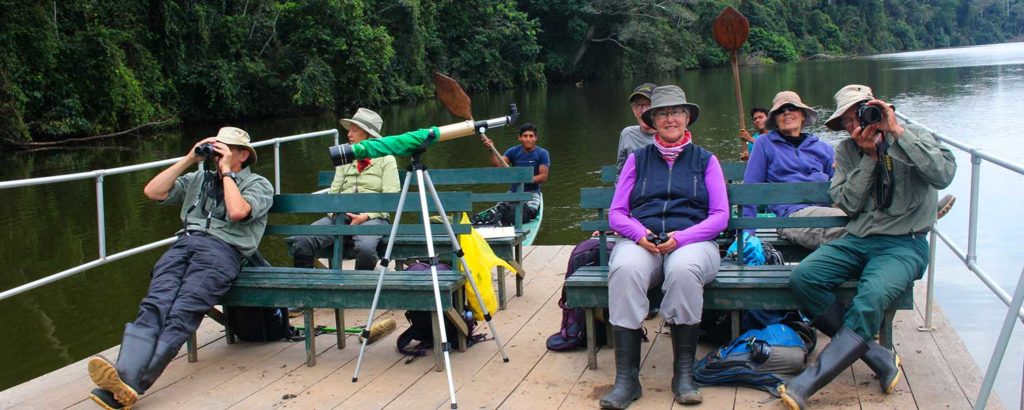
- Private boat in the lowland rainforest
- Entrance fees to all birding sites
- Guide equipment: Swarovski ATX 80 spotting scope (20–60x), sound recording and playback equipment, green laser pointer, spotlight for owling, binoculars and the field guide Birds of Peru
Not included in the price
- Domestic flights from Lima to Cusco (we can help you book them)
- Laundry and phone calls
- Medical costs and travel insurance
- Excess baggage charges
- Personal expenses
What to Bring / Packing Tips
- Binoculars
- Day pack
- Plastic bags (to keep everything dry)
- Rain gear
- Sweater, fleece or light jacket
- Long pants, long socks and long-sleeved shirts
- T-shirts/Shorts
- 1 pair of hiking boots and 1 pair of light shoes or sandals
- Sunhat, sunglasses, sun block
- Insect repellent
- Water bottle
- passport
- Money for soft drinks or beers and handicrafts
- This is a private tour with a minimum of 2 travelers.
- Birding tours are confirmed on request: tell us your dates and target species, and we will adapt the itinerary.
Questions about this tour
What altitudes does the tour cover?
It starts in Cusco at about 3,400 m, crosses the dry Andes, spends the first night at Wayqecha at 2,700 m and descends through the cloud forest (1,000–2,400 m) to Villa Carmen at about 500 m and the lowlands at Amazonia Lodge.
Which endemics can I see?
Targets include Bearded Mountaineer, Chestnut-breasted Mountain-Finch, Creamy-crested Spinetail, Red-and-white Antpitta, Black-backed Tody-Flycatcher, Peruvian Piedtail, Fine-barred Piculet, Koepcke's Hermit and, with luck, the very rare Cerulean-capped Manakin.
Where do we stay?
At the Wayqecha research station, Cock-of-the-Rock Lodge, Villa Carmen and Amazonia Lodge, all along the Manu Road.
Is it a private tour?
Yes. It runs as a private tour with a minimum of 2 travelers, with a specialist bird guide, private transportation and a private boat in the lowlands.
How do I book a birding tour?
Birding tours are confirmed on request. Send us your dates and target species; we check lodges and guides, and you secure the booking with a 30% deposit.
Other Recommended Expeditions