
Black Caiman and Spectacled Caiman: Caimans in Peru and Where to See Them
The black caiman (Melanosuchus niger) is the top predator of the Amazon and one of the largest crocodylians in the world: adult males commonly reach 3–4 m (10–13 ft), and exceptional ones approach 5 m (16 ft). It lives in Peru together with the smaller spectacled caiman (Caiman crocodilus), which our guides call the white caiman, and on our Tambopata tours we look for both at night from a boat with a spotlight.
Black caiman vs spectacled caiman
| Black caiman | Spectacled (white) caiman | |
|---|---|---|
| Scientific name | Melanosuchus niger | Caiman crocodilus |
| Name in Peru | Caimán negro | Caimán blanco |
| Length | Males commonly 3–4 m (10–13 ft); exceptional ones close to 5 m (16 ft) | Usually 1.5–2.1 m (5–7 ft); historically up to 3 m (10 ft) |
| Weight | — | 7–58 kg (15–128 lb), about 40 kg (88 lb) on average |
| How to recognize it | Very dark; young ones have yellow and white bands | Olive to nearly black with crossbands, and a bony ridge between the eyes, like the bridge of a pair of glasses |
| Diet | Fish such as piranhas and catfish, and mammals such as capybaras, birds and reptiles | From insects, snails and crabs to fish, snakes, turtles, birds and mammals |
| Habitat | Large rivers, oxbow lakes, floodplain lakes, flooded forest and wetlands | Rivers and wetlands, usually with slow-moving water |
| Nest | 30–60 eggs, incubated for about 70–90 days | 10–30 eggs, incubated for 65–104 days; nest temperature decides the sex of the young |
| Status | Least Concern (IUCN); Near Threatened in Peru | Least Concern (IUCN) |
How big is a black caiman?
Adult male black caimans commonly measure 3 to 4 m (10 to 13 ft), and exceptional individuals approach 5 m (16 ft), which makes it one of the largest crocodylians on Earth and the top predator wherever it lives. It hunts fish such as piranhas and catfish in the water, and on land, usually at night, it can take mammals as large as capybaras. The spectacled caiman is much smaller, usually 1.5 to 2.1 m (5 to 7 ft).
Caiman vs alligator: what is the difference?
Caimans belong to the same family as alligators, Alligatoridae. The black caiman looks like an American alligator but is more closely related to the other caimans. The spectacled caiman is easy to tell from other caimans in the same rivers by the bony ridge between its eyes, which gives it its name.
Are caimans dangerous?
They can be. There have been attacks on people by black caimans, and the spectacled caiman is considered potentially dangerous to people and pets, although its smaller size makes it less of a threat. On our tours you watch them from the boat or the shore with your guide.
Where to see caimans in Peru
Caimans live in the rivers and oxbow lakes of the Peruvian Amazon. These are the places where our groups look for them:
| Place | What we do | Our tour |
|---|---|---|
| Tambopata River, near Collpas Tambopata Inn | Boat ride with a spotlight after dark on day 1, looking for white and black caimans | Tambopata 3 days (from $295), Lake Sandoval 3 days (from $320) and 4 days (from $350) |
| Machuhuasi oxbow lake, Manu | Around the lake until sunset on day 2, together with herons, toucans and, with luck, capybaras and the hoatzin | Manu 3 days (from $300), 4 days (from $350) and our 5-day Manu tours |
| Manu River, Manu Reserved Zone | White caimans on the riverbanks, with turtles and capybaras, on the way to the oxbow lakes of giant otters | Reserved Zone 6 days (from $900), 7 days and 8 days |
Compare our Tambopata tours or our Manu tours, or read about the Amazon rainforest in Peru.
Is the black caiman endangered?
Not any more, globally. Hunting for its skin in the mid-20th century drastically reduced its populations, but many have since recovered, and the IUCN now lists the black caiman as Least Concern. In Peru it is still classified as Near Threatened on the official list of threatened wildlife. The spectacled caiman is listed as Least Concern, and international trade in both species is controlled under CITES.
Sources
- IUCN SSC Crocodile Specialist Group: Black caiman (Melanosuchus niger) (range, habitat, size, color, diet, nesting and status)
- IUCN SSC Crocodile Specialist Group: Caimans (family Alligatoridae)
- Animal Diversity Web (University of Michigan): Melanosuchus niger and Caiman crocodilus (diet, behavior, danger to people, size and nesting of the spectacled caiman, CITES)
- El Peruano, 8 April 2014: Supreme Decree 004-2014-MINAGRI (PDF) (black caiman Near Threatened in Peru)
Updated November 2026.
Tours where we look for caimans
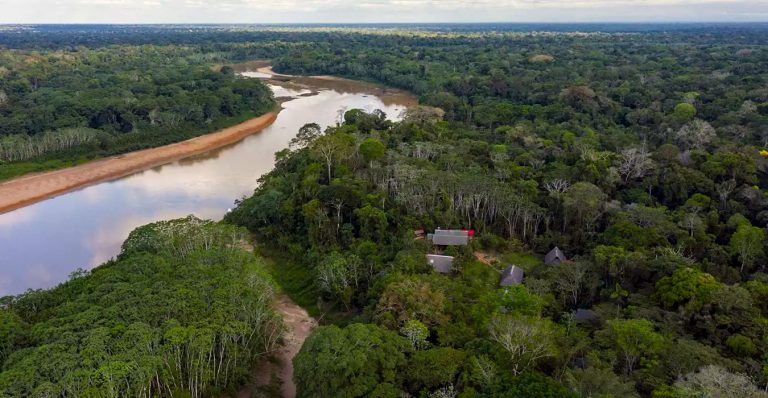
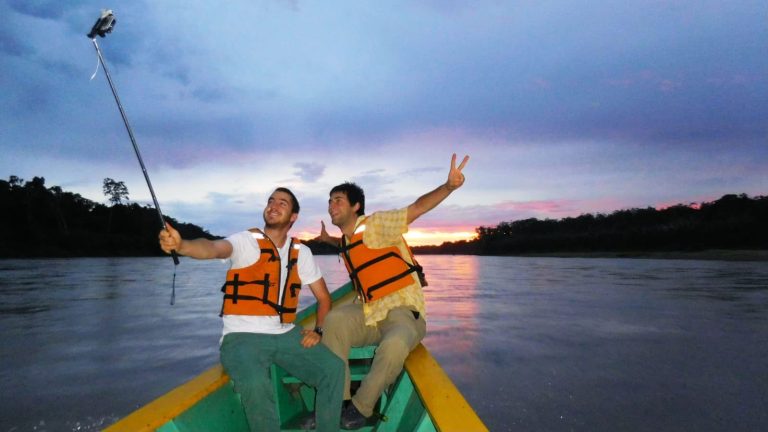
In Tambopata we look for white and black caimans by boat with a spotlight on the first night; in Manu, around the oxbow lakes and on the banks of the Manu River.

Frequently asked questions
How big is a black caiman?
Adult males commonly reach 3 to 4 m (10 to 13 ft), and exceptional ones approach 5 m (16 ft), according to the IUCN Crocodile Specialist Group. It is one of the largest crocodylians in the world.
Is the black caiman the largest predator in the Amazon?
Yes, it is considered the top predator of the Amazon. It eats fish such as piranhas and catfish, birds, reptiles and mammals as large as capybaras.
Are caimans dangerous to humans?
They can be: there have been attacks on people by black caimans, and the smaller spectacled caiman is considered potentially dangerous. On our tours you watch them from the boat or the shore with your guide.
What is the difference between a caiman and an alligator?
Caimans belong to the same family as alligators, Alligatoridae. The black caiman looks like an American alligator but is more closely related to the other caimans.
Are there caimans in Peru?
Yes. The black caiman and the spectacled caiman, which our guides call the white caiman, live in the rivers and oxbow lakes of the Peruvian Amazon, including Manu and Tambopata.
Where can I see caimans in Peru?
On our Tambopata tours we look for white and black caimans by boat with a spotlight on the first night. In Manu you see them around the Machuhuasi oxbow lake and, on the Reserved Zone tours, on the banks of the Manu River.
Is the black caiman endangered?
Not globally: after skin hunting in the mid-20th century many populations recovered, and the IUCN lists it as Least Concern. In Peru it is still classified as Near Threatened.